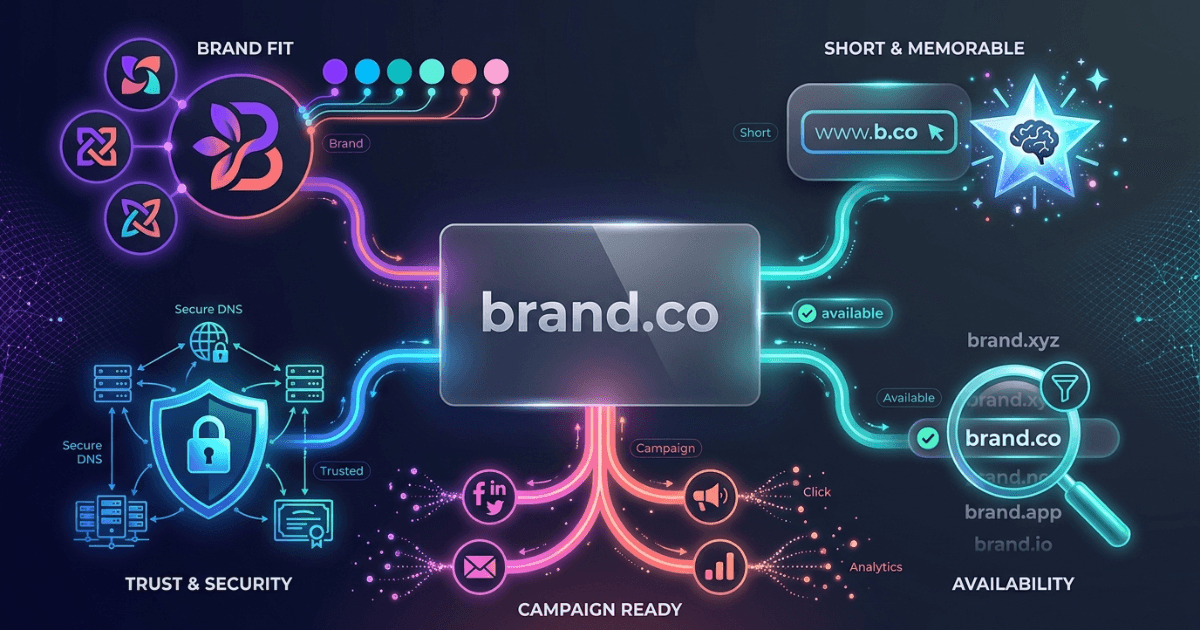
To choose custom domain names well, start with brand fit, not cleverness. The best domain is short, clear, and easy to trust in a feed, email, or ad.
For marketing agencies, influencers, and social teams, the domain is part of the brand itself. It shapes recall, click confidence, and how your links look on every channel. If you also use branded links, this choice affects tracking and campaign consistency. For a deeper look at that layer, see The Complete Guide to Branded Links and Custom Domains.
Understanding the Importance of a Custom Domain
A custom domain gives your brand a stable home. It also makes your links look intentional instead of generic. That matters when you post across social platforms, run paid campaigns, or share content in DMs. Choosing the right custom domain can significantly impact your brand's perception and effectiveness.
Trust is the main gain. People are more likely to click a clear brand name than a random string of letters. A clean domain also helps teams keep naming consistent across landing pages, newsletters, and short links. Ensure you choose a custom domain that aligns with your brand's identity.
Factors to Consider When You Choose Custom Domain
Start with length. Short domains are easier to remember and less likely to be mistyped. Then check pronunciation, spelling, and whether the name still makes sense when spoken aloud. These factors are crucial when you choose a custom domain.
A good domain should pass three tests. It should be easy to say, easy to spell, and easy to scale. If you expect new services, regions, or campaigns, avoid a name that is too narrow. This is essential when you choose a custom domain for future growth.
- Keep it short and readable.
- Avoid hyphens unless they are truly needed.
- Choose a name that matches your brand voice.
- Check that the domain works for future campaigns.
- Prefer a name that fits social bios and ad copy.
If you are building branded links, plan for that use case now. A domain used only for a homepage may not work well as a link brand. The Shrno product page shows how link tools fit into this workflow.
How to Check Domain Name Availability
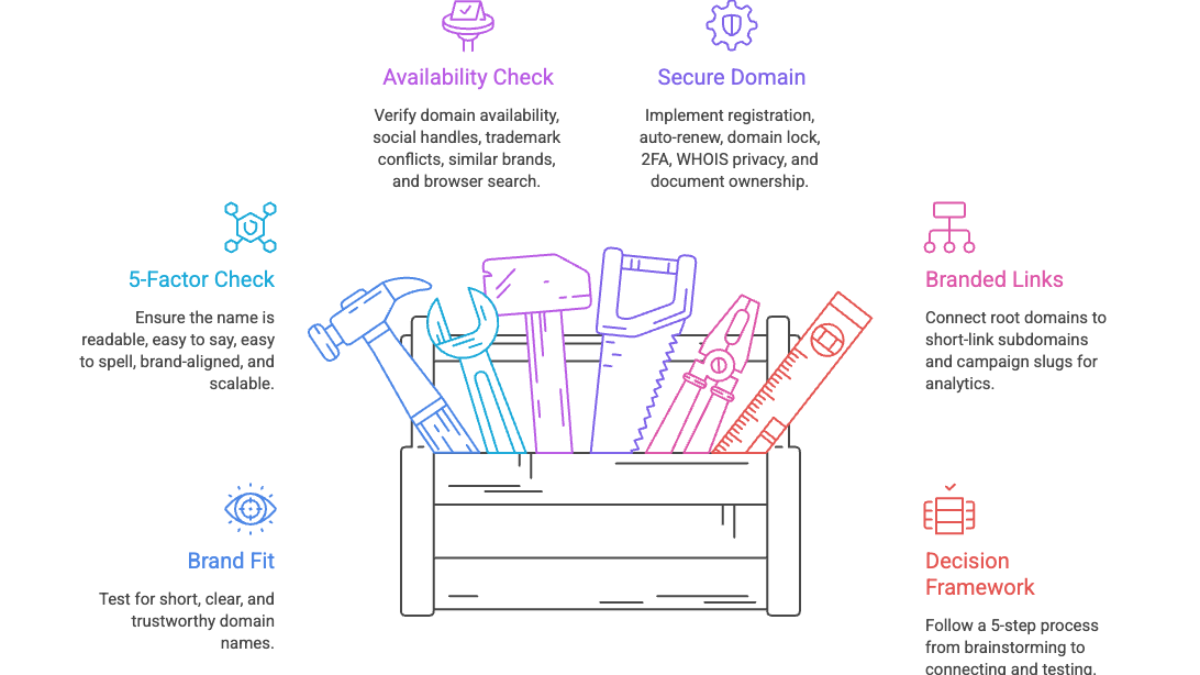
Once you have a shortlist, check domain name availability across common extensions. Look at .com first if it fits your market, but do not stop there. The right choice may be another extension if the name is better. Checking availability is a key step when you choose a custom domain.
Use a registrar search tool, then confirm the name on social platforms too. A matching handle can matter as much as the domain itself for creators and agencies. For technical rules on domain syntax, the RFC 1035 specification remains a useful reference, and ICANN’s domain lookup tool helps with registration checks.
Also test for obvious confusion. Search the name in a browser. Look for similar brands, common misspellings, and trademark risk. If the name already points to another active business, move on.
Tips for Securing Your Chosen Domain
When you find the right name, register it quickly. Good domains move fast. Buy the main extension first, then add close variants if the brand matters to you. Securing your chosen domain is crucial after you choose a custom domain.
Use auto-renew and lock the domain at the registrar. Add two-factor authentication. Turn on WHOIS privacy where it is available. These steps reduce the risk of loss, hijack, or accidental expiry.
If you manage client brands, document ownership from day one. Note who controls the registrar login, DNS access, and renewal payment. A simple ownership record avoids messy handoffs later.
Integrating Your Custom Domain with Branded Links
This is where the choose custom domain decision pays off. A branded short domain can lift trust in social posts, ads, QR codes, and influencer campaigns. It also gives your team one clean place to measure clicks.
If you want a practical example of the link side, review Creating Your First Shortened URL with Shrno: A Practical Guide and How URL Shortening Works: A Technical Breakdown for Marketing Teams. Those posts show how domain choice connects to the full link workflow.
A strong setup usually looks like this: one branded root domain, one short link subdomain, and a consistent naming pattern for campaigns. That structure makes reporting cleaner and helps your audience recognise your links faster.
For teams that use QR codes, this becomes even more useful. A branded domain keeps the scan destination aligned with the rest of the campaign. If you want to compare use cases, Static vs Dynamic QR Codes: Which Should You Choose? is a helpful companion read.
A quick decision framework
- List names that fit your brand and sound natural.
- Remove names that are hard to spell or say.
- Check availability for domains, handles, and trademarks.
- Register the best option fast.
- Connect the domain to your link tool and test it end to end.
If you want one rule to keep in mind, use this: choose the domain your audience will trust at a glance. That simple test is often better than chasing trends or keyword tricks.
Frequently Asked Questions