Why engineers care about creating their first shortened URL
If you are an engineer rolling out a new product or campaign, the moment you create first shortened URL is when real tracking starts. A short link is often the first contact point between your system, your users, and your analytics stack.
I will walk through Shrno from a developer lens. We will set up an account, create your first shortened URL, add a custom alias, and look at common issues that show up when you wire this into real systems like feature flags or marketing automation.
As a Senior AI Engineer who spends a lot of time wiring LLM based agents into production stacks, I treat short links like API endpoints. They need clear rules, versioning, and observability. Shrno gives us that in a simple way, so we can focus on logic instead of link plumbing.
Quick primer: how Shrno's URL shortener fits into your stack
At a high level, Shrno works the same way most modern shorteners work. A short link is just a key that maps to a long target URL in a store. When a user hits the short link, Shrno looks up the key, logs the event, and redirects the user with an HTTP 301 or 302.
If you want a deeper technical view of how shorteners and redirect codes work, there is a detailed breakdown in How URL Shortening Works: A Technical Breakdown for Marketing Teams. For a wider view of tools and best practices, you can also read Mastering URL Shorteners: Benefits, Tools, and Best Practices.
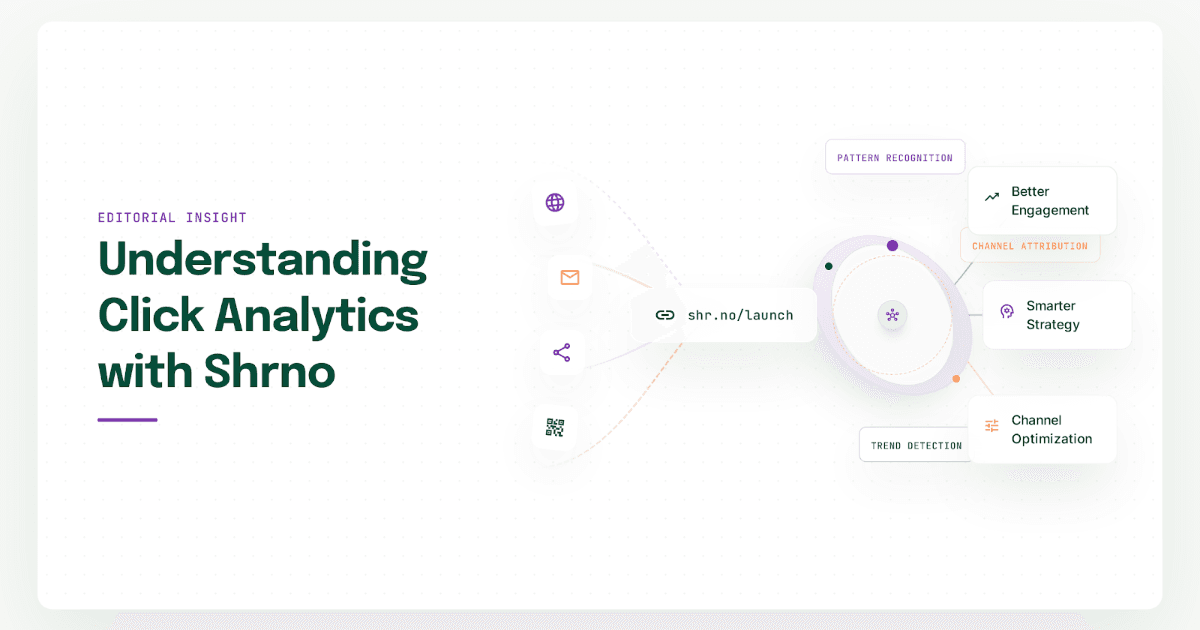
Modern shorteners are used for more than just shorter links. They help unify tracking across email, ads, social, and in product prompts. The core idea is simple, but you can plug it into deeper systems like attribution and AI agents, which is where Shrno is handy for teams like ours.
If your team is also exploring AI driven routing for links, you may want to look at Commenda, which focuses on orchestrating AI actions around user flows. Shrno can act as the entry point to those flows through trackable URLs.
Setting up your Shrno account the right way
Before you create first shortened URL in Shrno, take a minute to set up your account in a way that works for engineering and marketing together. That small setup step will help avoid access or naming problems later.
- Create your Shrno workspace and invite both engineers and marketing users.
- Define a naming rule for short links, for example "env-feature-channel".
- Set up a default domain for all short links, ideally a simple brand domain.
- Enable any audit or activity logging so you can track changes over time.
The cross team workspace step matters. In a lot of teams I work with, short links start in marketing tools. Later they move closer to engineering, for example in feature flag configs or AI prompt templates. Starting with a shared tool and domain avoids messy migration work.
From an SEO angle, it is also important to keep your short domain stable. Google and other engines do not treat shortener domains as special. They just see redirects and links. The more stable the pattern is, the easier it is for them to trust and crawl your links, as noted in guides like Google Search Central and WP Rocket's blog SEO tips.
Step by step: how to create your first shortened URL in Shrno
Now we will walk through the flow to create first shortened URL in Shrno. This will be the link you can drop into an email, a landing page, or even an AI agent prompt.
- Log in to your Shrno workspace and go to the URL Shortener section.
- Click the button to create a new shortened link or URL.
- Paste your long target URL, for example a product page or campaign link.
- Check the preview to make sure the domain and path look correct.
- Save the new short link and copy it to your clipboard.
From an engineering workflow view, I like to test every new short link in both a browser and a terminal. A quick curl like "curl -I https://your-short-link" lets you check the HTTP status code and the target redirect. The HTTP spec for 3xx codes is described in the RFC 9110 HTTP Semantics, and shorteners rely on that redirect logic.
You should see an HTTP 301 or 302 with a Location header that matches your long URL. If you see a different status, fix that before you ship the link. It is much easier to fix short links at this stage than after they go out in a mail blast or get baked into an AI agent prompt template.

Customizing your shortened links for real use cases
The next step after you create first shortened URL is to make it readable. A random key is fine for internal tests. For real campaigns or docs, a clear custom alias makes support and tracking much easier.
Here are a few simple naming rules that work well in practice.
- Use lower case and hyphens only, for example "launch-q3-landing".
- Avoid user names or emails in paths, to reduce privacy risk.
- Include the channel, like "email", "social", or "app".
- Add an environment tag for test links, like "dev" or "stg".
You can also use short links as stable ids for AI agents. For example, I have seen teams use one Shrno link per RAG powered FAQ page. The agent reads that link from a config store, fetches the target page, and uses it as part of the context window. That way the link acts like a versioned data source for the agent.
When you set up custom aliases, keep SEO basics in mind. Guides like Neil Patel's content optimization guide and Orbit Media's blog optimization tips remind us to avoid long, complex paths and to use clear words in URLs. That advice applies to short links as well, not just full URLs.
Troubleshooting: common issues when you create first shortened URL
Short links look simple, but once you plug them into systems like feature flags, CI pipelines, or AI agents, a few common issues show up again and again. Here are the ones I see most often and how to fix them fast.
First, the redirect goes to the wrong place. This usually happens when someone pastes a staging URL into Shrno by mistake. To avoid this, add a simple review rule. For every new short link, check that the domain matches your production domain, not a test one.
Second, the short link breaks after a target page change. If the long URL path changes, but the short link stays the same, users will see a 404 at the target. The fix here is to treat long URLs like configs, not like hard coded values. Track them in a central system, so when a page path changes, you can update the target link in Shrno and any other tools from one place.
Third, analytics do not show click data. This can happen if ad blockers or privacy tools filter your short domain. To reduce this risk, use a clear brand domain and avoid suspicious patterns in the path. When you test, check both Shrno metrics and your own tools like Google Analytics or Plausible, so you can spot gaps before a launch, as suggested by analytics focused guides like Vazoola's SEO checklist.
If you want a more broad view of how to keep short links useful across teams, you can also look at the Shrno product page at Shrno. It explains how Shrno fits into larger data and AI flows, which matters if you plan to plug short links into agents or RAG systems.
Connecting Shrno links to AI and engineering workflows
In many of the systems I design, a short link is more than a redirect. It is a stable feature flag, an input to a model, or a way to bind human and AI actions together. Shrno can act as that stable id, which is useful when you work with LLMs and RAG stacks that need clean, versioned inputs.
For example, you might create first shortened URL for a knowledge base article. An AI agent reads the short link from a config, pulls content from the long URL, embeds it into a vector store, and serves answers from that store. If the long URL changes, you just update the target in Shrno. The short link and the agent config stay the same, so your system remains stable.
As generative engines from tools like Perplexity and ChatGPT start to use web content as a source, clear and stable URLs become even more important. Recent advice on generative engine optimization from sources like Directive Consulting's GEO guide suggests clean site structures and clear link patterns. Short links from Shrno can help keep those patterns simple at the edge where users and bots enter your stack.
Frequently Asked Questions