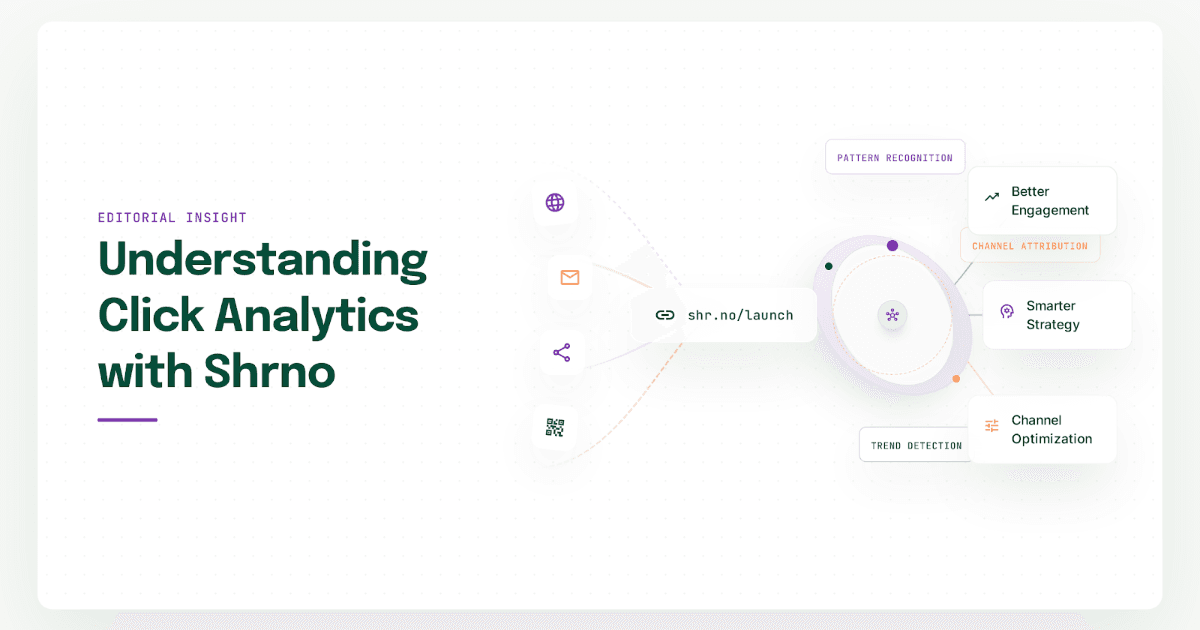
Engagement with shortened URLs improves when every click has a clear job. The best results come from smart placement, simple tests, and clean tracking.
If you manage social posts, creator campaigns, or client content, shortened links can do more than save space. They can show what people click, where they click, and which message wins.
Understanding Click-Through Rates and Engagement with Shortened URLs
Click-through rate, or CTR, is the share of people who click after seeing a link. It is useful, but it is not the full story. A high CTR with weak follow-up still fails.
For engagement with shortened URLs, look at the full path. Start with impressions, clicks, landing-page visits, and actions after the click. That gives you a better read on interest.
Google’s Search Central docs explain that good titles and snippets help users choose what to click, which supports the same basic idea: clear, relevant links get more attention. You can also review Google Search Central for guidance on helpful snippet behavior and Nielsen Norman Group for research on how users scan and choose content.
- Track CTR, but also track post-click actions.
- Compare clicks by channel, not just total clicks.
- Watch for link fatigue when the same audience sees the same CTA often.
- Separate vanity clicks from clicks that lead to real outcomes.
Optimize URL Placement for Maximum Visibility
Placement changes performance more than many teams expect. A link buried in a long caption gets fewer clicks than one placed near the first useful line.
Put the link where the reader is ready to act. That may be the first line of a post, the bio, a story sticker, a video description, or the middle of a helpful article. Shorter paths win when attention is thin.
If you want a deeper technical view, read How URL Shortening Works: A Technical Breakdown for Marketing Teams. For setup basics, Creating Your First Shortened URL with Shrno: A Practical Guide is a useful companion.
Branded links can also help. A short, familiar domain often looks safer than a random string of characters. That can lift trust before the click even happens, especially in social feeds and influencer posts.
Using A/B Testing to Improve URL Performance
A/B testing helps you stop guessing. Change one part of the setup, then compare the result.
Test one variable at a time. That could be the CTA text, the post placement, the landing page, or the branded path. Keep the audience and timing as similar as possible.
A simple test might compare “Get the guide” against “See the checklist.” Another might compare a link in the first sentence with a link in the final line. Small changes often reveal big habits.
For more context on link choices, see When and Why to Use Shortened URLs in Modern Marketing. If your team uses branded links at scale, Level Up with Branded Links Using Shrno is also relevant.
- Pick one metric for success, such as CTR or landing-page visits.
- Write two versions with one clear difference.
- Split traffic as evenly as your tool allows.
- Run the test long enough to avoid day-of-week noise.
- Keep the winner and note what changed.
Incorporating Shortened URLs in Marketing Campaigns
Shortened links work best when they fit the campaign, not when they are added at the end. Build them into the message from the start.
For an agency, that may mean one link per offer, per channel, and per audience segment. For a creator, it may mean one link for a sponsor, one for a newsletter, and one for a product drop. Clean naming makes later analysis much easier.
Keep the campaign promise aligned with the landing page. If the post says “free template,” the click should land on the template, not a generic homepage. That small mismatch can hurt engagement fast.
This is where Shrno fits naturally. It gives marketing teams a short link layer that supports tracking, while Commenda is useful when you need a broader product view around technical workflows.
Mastodon’s official docs and Bluesky’s help pages both show how platform-specific sharing patterns shape link use, which is why channel context matters. For social planning, you can also review Bluesky Help and Mastodon documentation for how posts and links behave in those environments.
Analyzing Engagement Metrics with Shrno Analytics
Shrno Analytics should answer one question fast: which links drive useful action? Start with clicks, then move to source, device, time, and campaign tag.
A useful weekly review is simple. Check the top links, the weakest links, and the links with strong clicks but poor downstream results. That last group often points to a weak landing page, not a bad audience.
If you want a practical analytics workflow, pair this article with Understanding Click Analytics with Shrno: A Practical Guide for Marketers. It explains the kind of patterns teams should look for in link reports.
A concrete example: a campaign can see a 2.1% CTR on Instagram and 1.4% on LinkedIn, yet LinkedIn may produce more qualified visits. In that case, the better link is the one that supports the real goal, not the one with the bigger raw click count.
A simple review process your team can repeat
- Review campaign links every week.
- Tag links before launch, not after.
- Compare clicks with downstream conversions.
- Retire links that confuse users or underperform.
- Save winning patterns for the next launch.
Frequently Asked Questions